8.2 million views for a fertility clinic that was starting from a fake audience
Genesis, a private reproductive medicine clinic, came to us with social accounts that looked active and produced nothing. Nineteen months later: three channels, 26,000 real followers, and a recruitment problem solved that had nothing to do with reach.
- 8.2Mviews across three platforms
- +26,000followers, all organic
- 17egg donors recruited from one campaign

• Starting point
An active blog that did nothing
The clinic already had social accounts. Doctors took part, posts went out on schedule, video was being made. On paper it was working. The numbers said otherwise.
Language nobody reads
Clinical copy and headlines written for colleagues, not for patients.
No strategy
Posts went out on the principle of whatever we feel like saying today.
Reach going nowhere
Up to 700 views on a post. Up to 120 on a story.
No engagement
Nothing saved, nothing shared, nothing commented on.
• The audit
The audit found the real problem, and it was not the content
The Instagram account had been bought, not built. Underneath a respectable follower count sat a large mass of bots. The algorithm could not identify who the real audience was, so it stopped trying to find more of them — and good content sank along with bad. No amount of posting was going to fix that.
We told the client on the audit call. It is not a comfortable conversation, and it is the reason everything after it worked.
• Strategy
One account was never going to be enough
The clinic wanted to build its preventive medicine practice, which meant reaching people in their twenties — an audience that was not on the channel the clinic was posting to. So we stopped treating this as account management and moved onto three platforms at once.
- Instagram
For the existing patients.
- YouTube
For depth.
- TikTok
For the age group the clinic had never reached.
We went looking for the real reasons people delay
The obvious segment was women aged 25 to 35 trying to conceive. That description is useless for writing content. We interviewed the doctors and read what patients actually wrote in, and found five things worth talking about:
- 01The appointment gets postponed until something hurts.
- 02Dangerous myths about pregnancy circulate and get believed.
- 03Women go first, and struggle to get their partner tested.
- 04Difficulty conceiving comes with enormous social pressure.
- 05They want to be heard, not handed unsolicited advice.
From that point we stopped writing about diagnoses and started writing about how it feels.
• Content system
We replaced posting with a system
A new follower had to understand what the clinic was for within a minute of arriving. So we built a route:
- An engaging video brings them in
- A pinned post explains the practice
- Highlights answer the next question
- An automated message picks up anyone who asks
A content plan with a funnel in it
We replaced ad hoc posting with fixed formats and a calendar built around where people are in their decision.
Seven lead magnets
Practical guides people actually download — a hospital bag checklist, a guide to reading your own test results.
We put faces where the logo was
Profile pictures became photographs of the doctors. People follow people.
• Production
Around 2,000 photographs and 180 videos, all shot by us
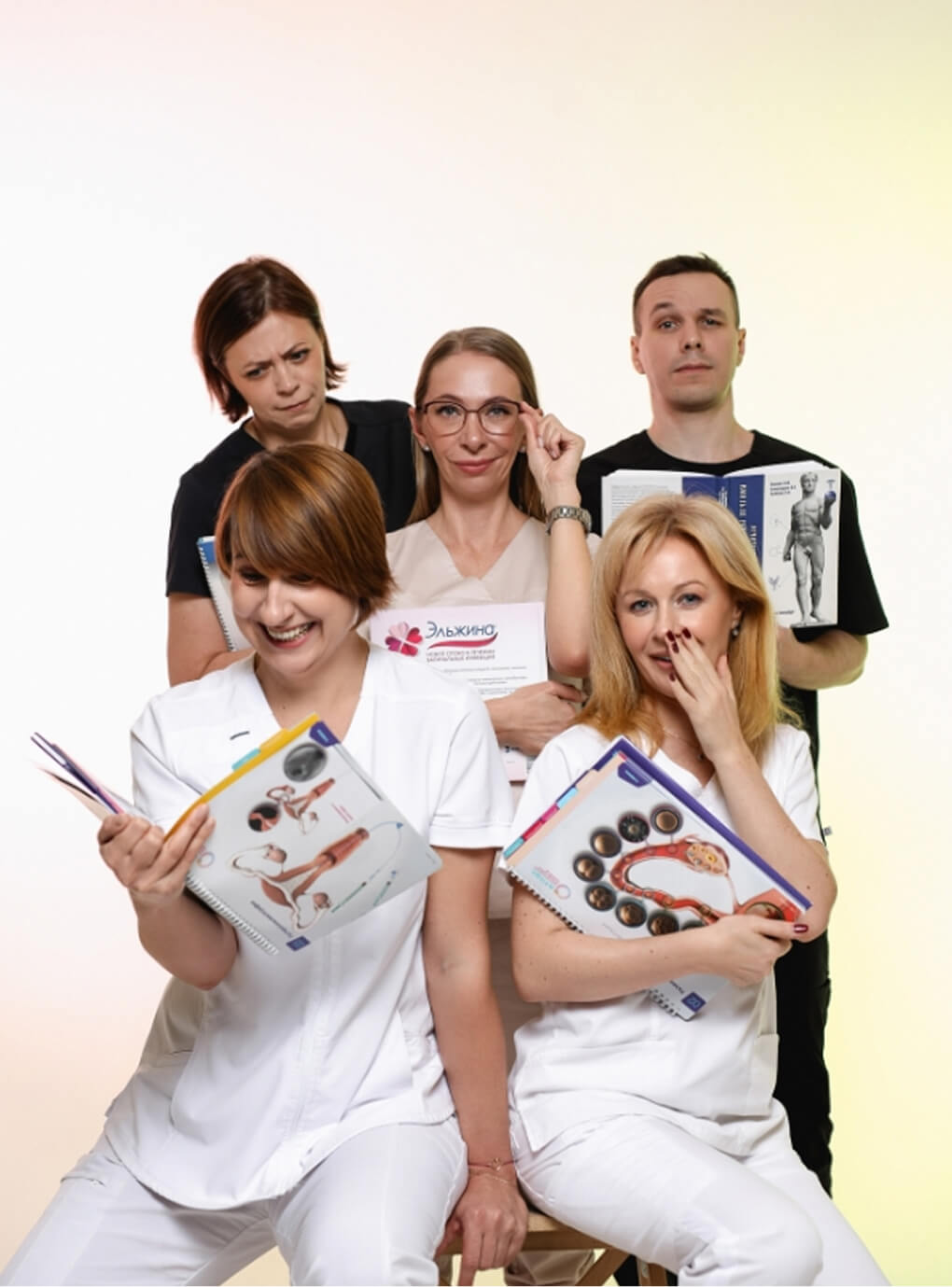
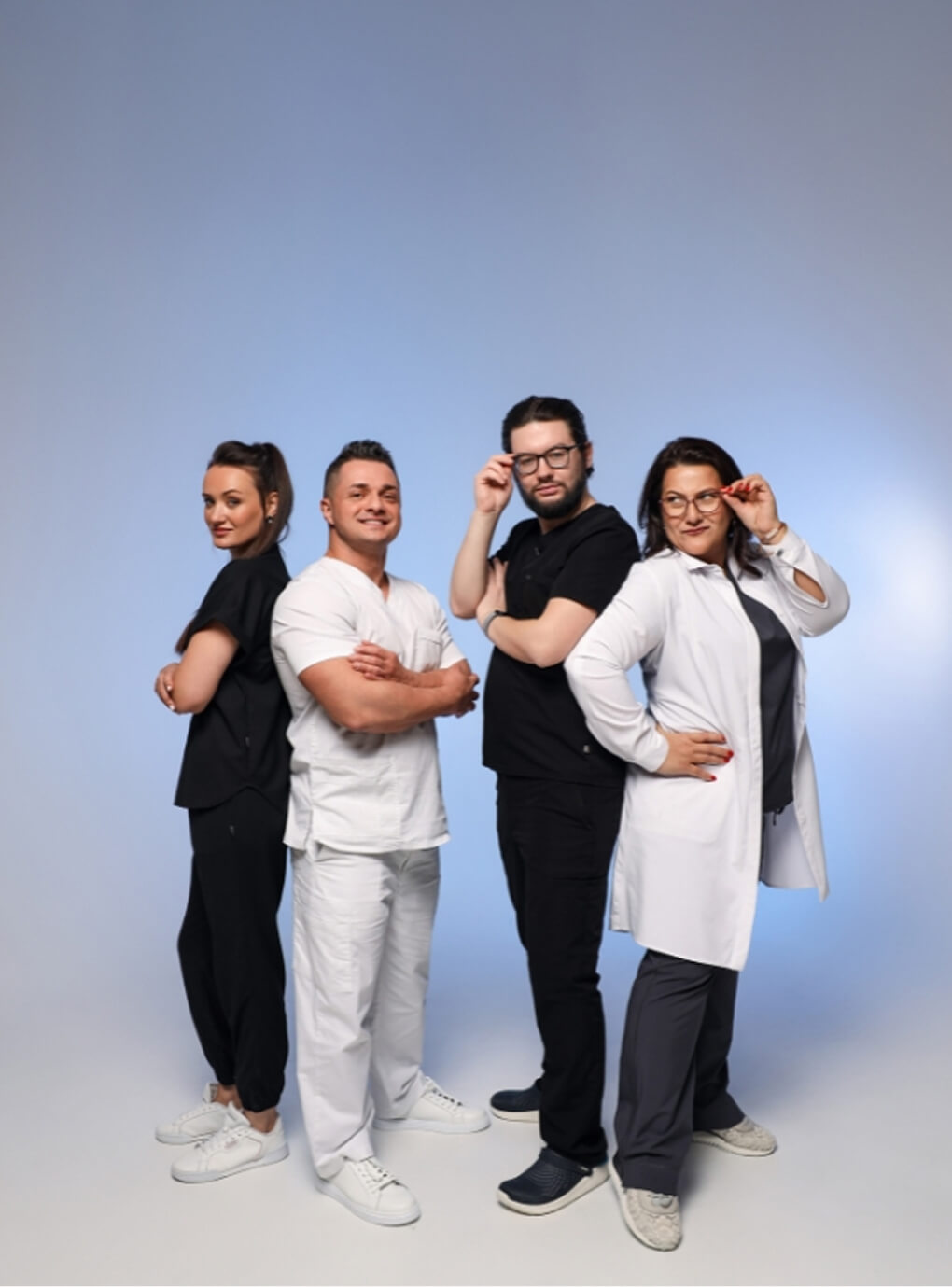
Stock photography was the fastest way to look like every other clinic, so we organised original shoots instead — the doctors, and staged sessions with a couple and an expectant couple. We brought in a photographer who built a concept around the one thing the clinic actually sells: being gentle with people at the worst moment of their year.

Doctors on camera
Answering the questions patients were already asking.
Street interviews
Ordinary people on uncomfortable topics — the format that travelled furthest.
Sketches
Situations from life, played out. People recognised themselves and sent them on.
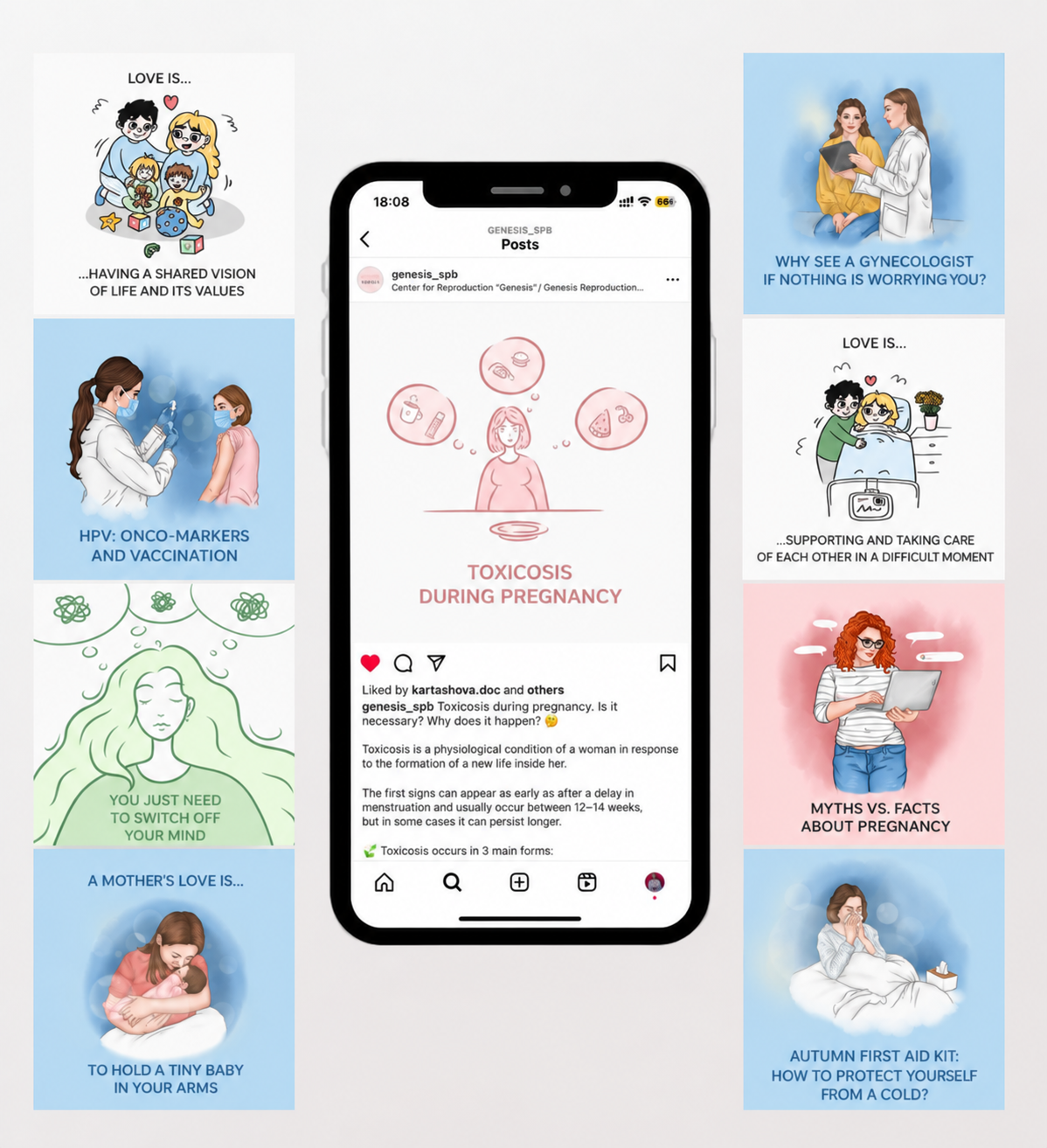
Illustration
Animated explainers for the things words make worse: how IVF works, what hormones do.
Video became the main format, and everything else was built to support it.
• Copywriting
Translating from clinical into human
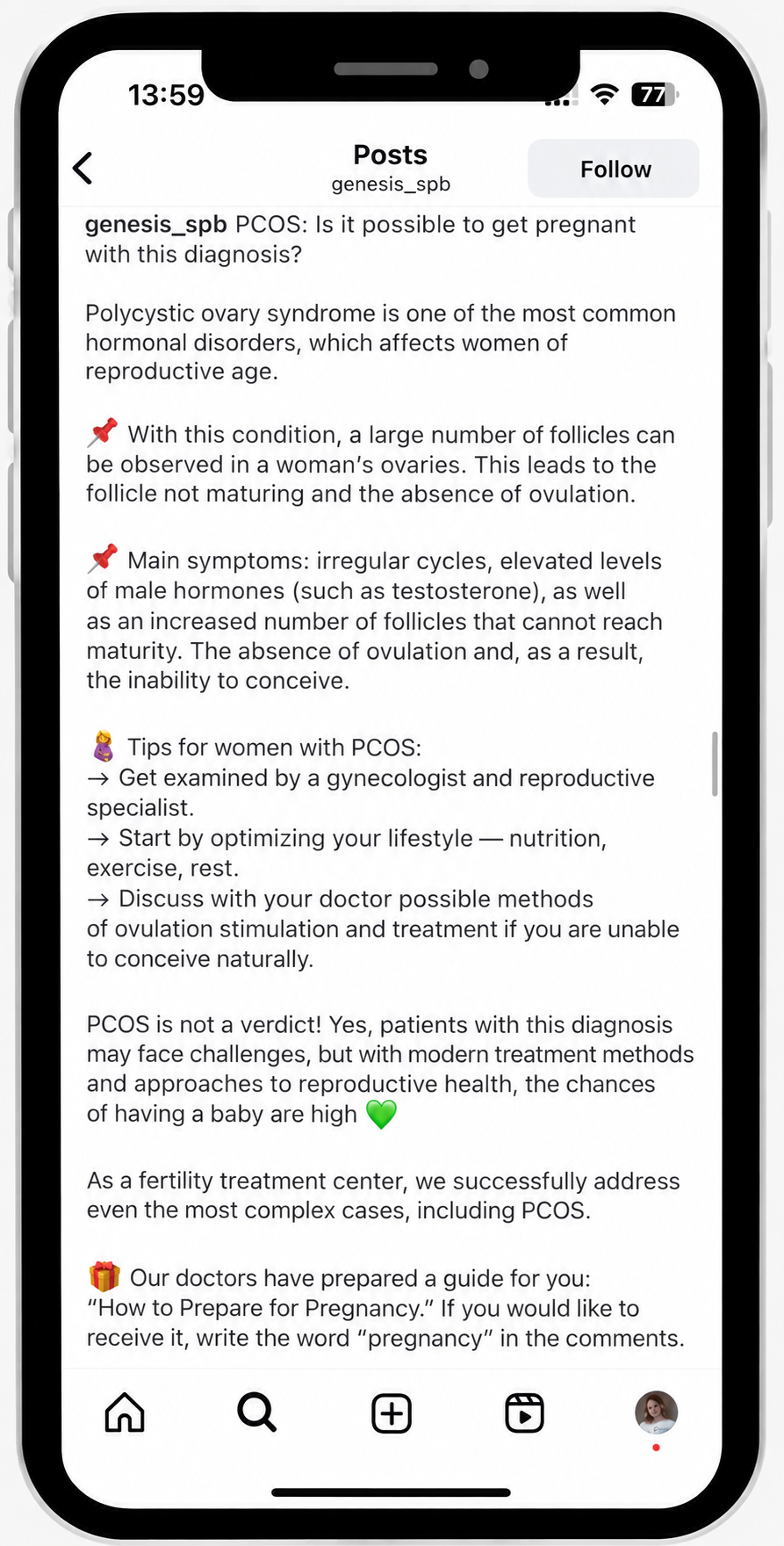
Everything the doctors gave us went through two rounds of editing. Not to simplify the medicine — to make it answer the question the patient is actually asking.
Symptoms of iron deficiency anaemia
Why am I tired all the time? How do I raise my ferritin?
• A sensitive brief
Then the clinic asked us to recruit egg donors
This is not a campaign you can run on volume. We were asking women to consider something that carries a real emotional threshold, and any hint of a hard sell would have killed it. So we wrote it plainly: what the process involves, what is asked of you, what happens next. No urgency, no persuasion.
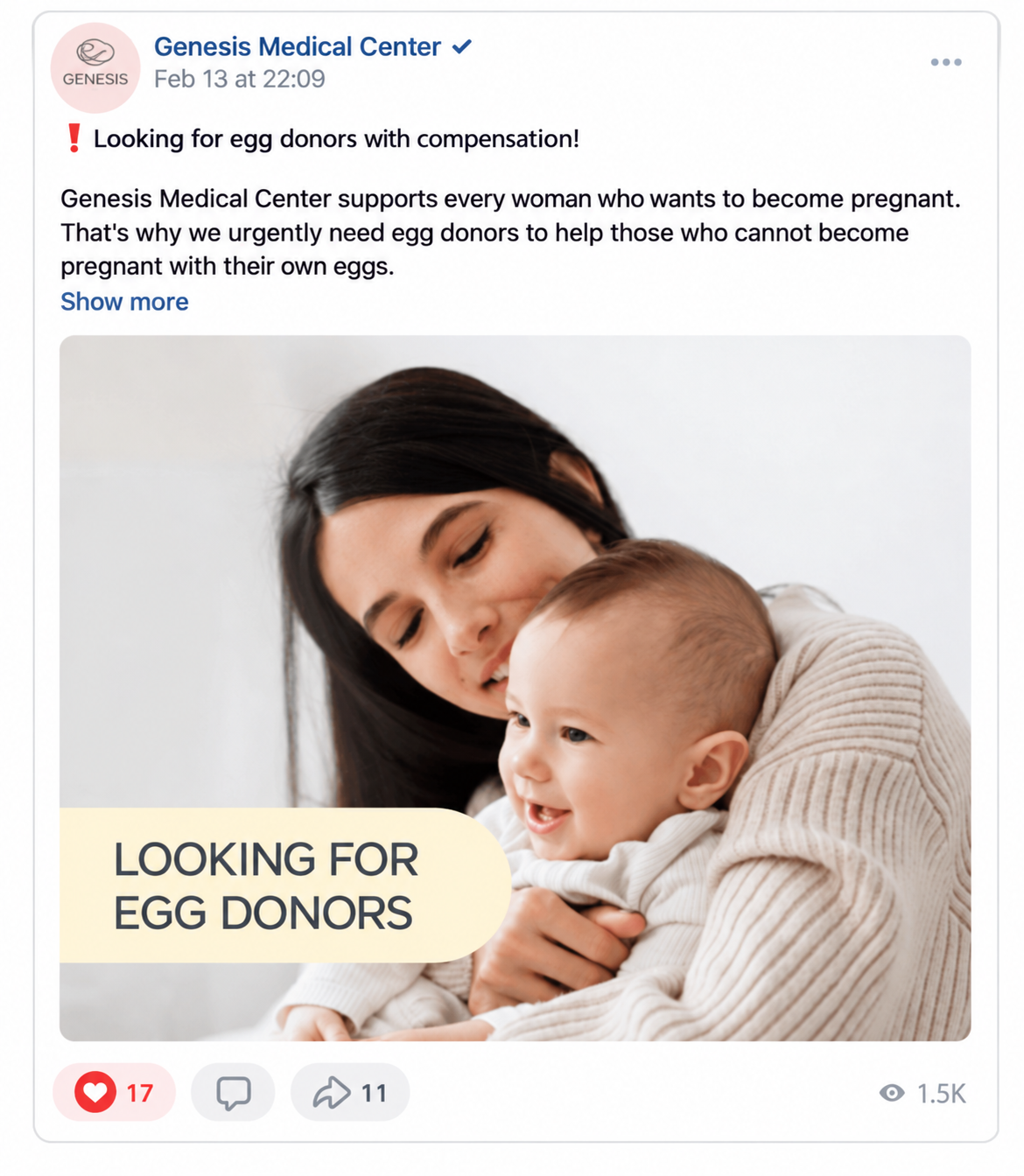
- 162enquiries from a single paid social campaign
- 17women completed full medical screening and became donors
Seventeen donors is not a marketing metric. It is a clinic that can now treat patients it could not treat before.
• Results
Nineteen months later
Across all platforms
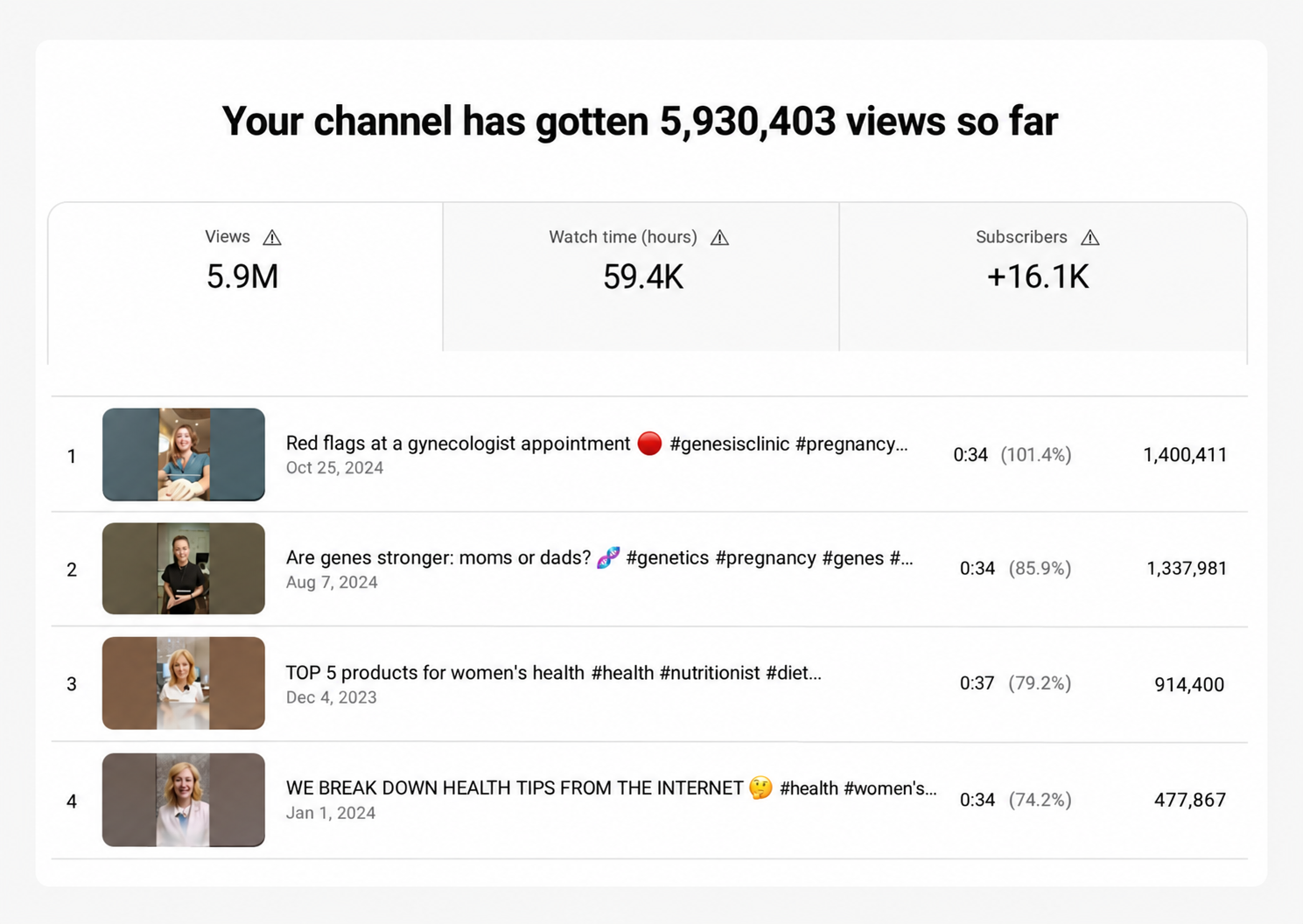
- YouTube
- Views
- 5.5M
- Subscribers
- +16,400
Built from nothing.
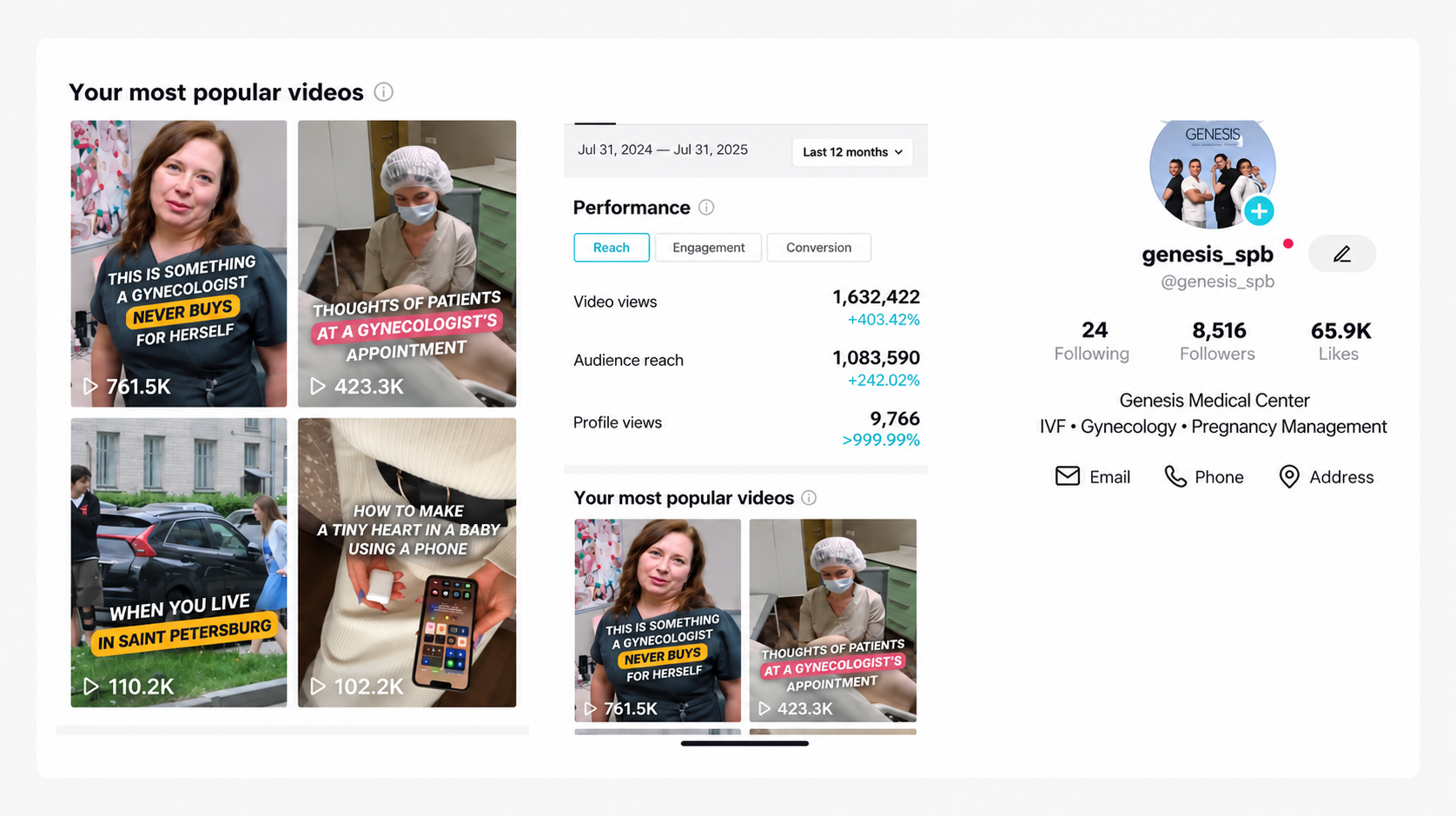
- TikTok
- Views
- 1.6M
- Followers
- +8,500
The audience the clinic had never reached.
- Instagram
- Reach
- 1.1M
- Reactions
- 21,600
- Engagement rate
- 4%
On an account that had to be rebuilt from a fake following.
Healthcare social media is not posting. It is an audit honest enough to find the real problem, production good enough that people stop scrolling, and the discipline to tie it to something the clinic can count. Done properly, it stops being a cost line.